


Beyond the Headset: IRIS-XR Explores the Human Side of XR at EuroXR 2026
How can immersive technologies respond more naturally to the way people interact with their surroundings? This question was particularly relevant at EuroXR 2026 in Valencia, Spain, where IRIS-XR partners participated in scientific discussions, research presentations and demonstrations exploring the next generation of Extended Reality.
The conference offered an opportunity for IRIS-XR to engage with the European XR research community, exchange knowledge and explore connections between emerging technologies and practical applications.
Making mixed reality interactions more natural
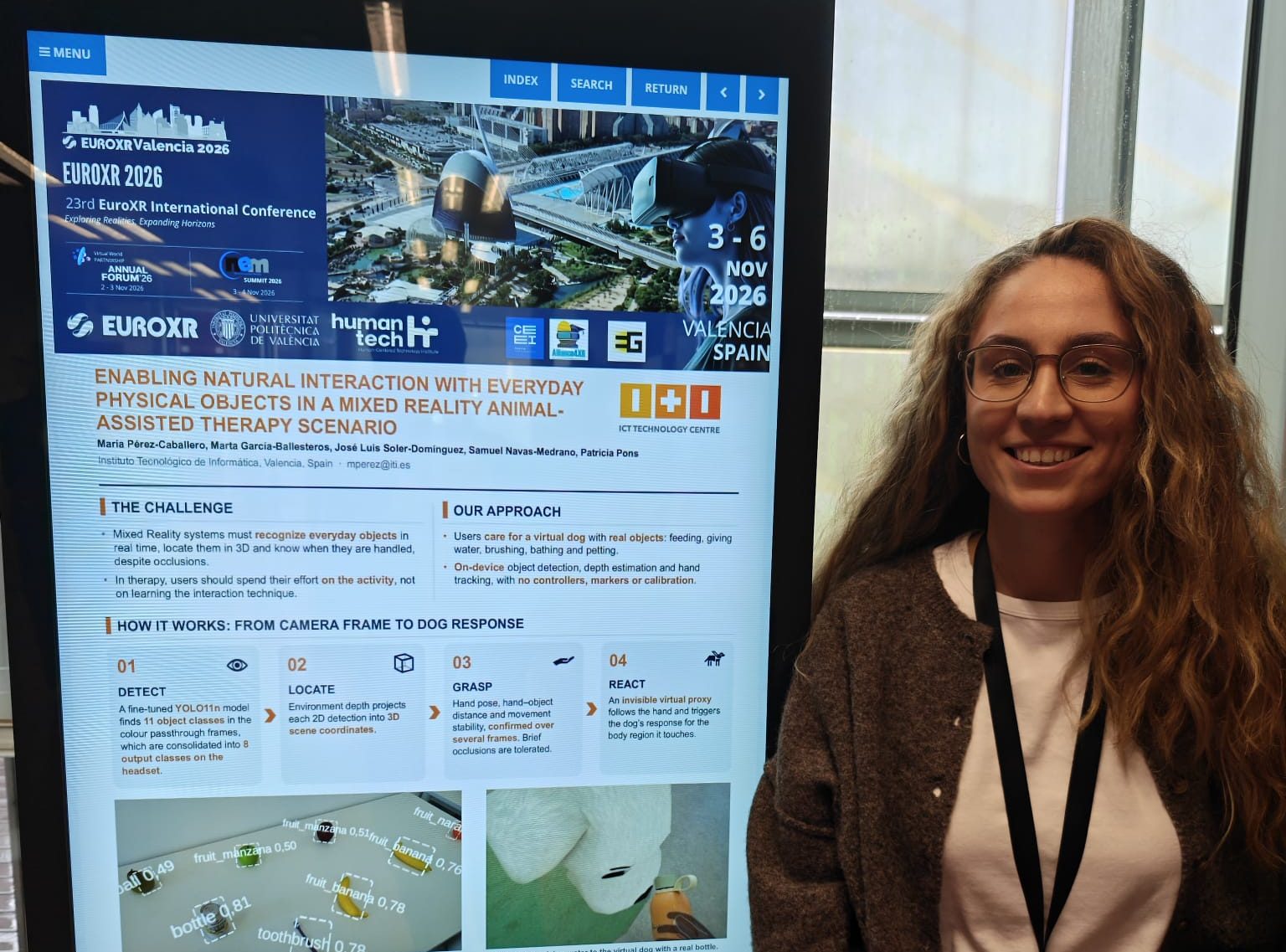
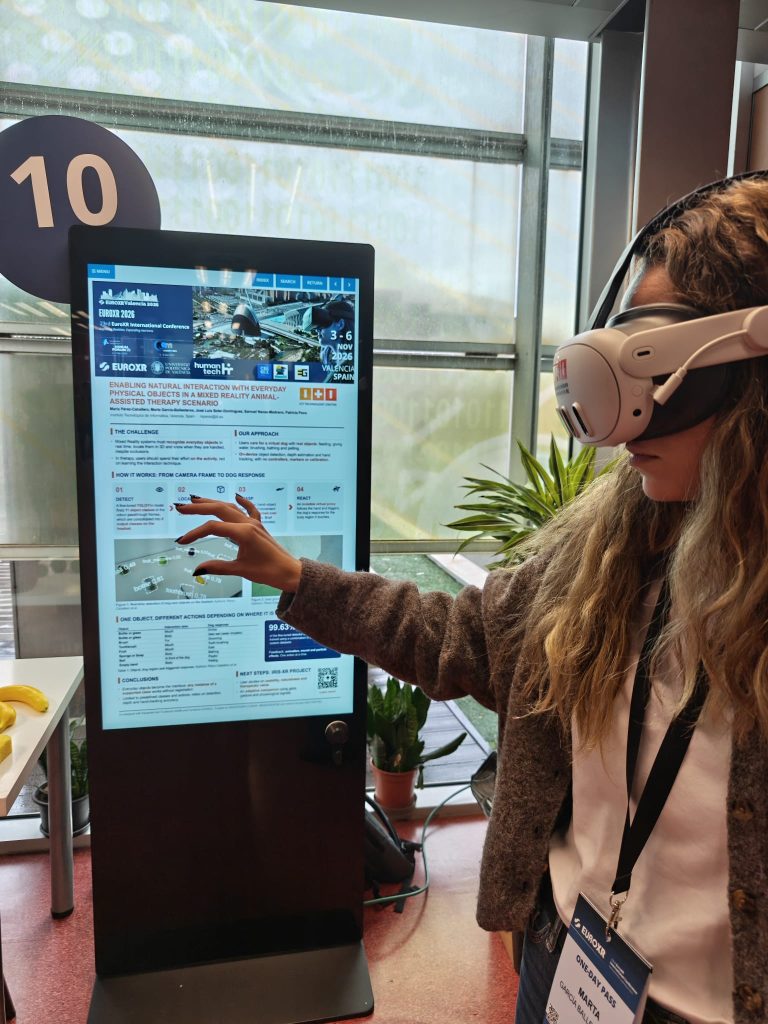
One of the research highlights was a poster and demonstration presented by Marta García Ballesteros from ITI on 3 November, entitled:
“Enabling Natural Interaction with Everyday Physical Objects in a Mixed Reality Animal-Assisted Therapy Scenario”.
This work showcases research results on Mixed Reality and multimodal interaction, demonstrating how users can naturally interact with everyday physical objects within a therapy scenario involving digital animals. The demo reflects one of the key research lines we have been developing at ITI, and which we expect to continue advancing within IRIS-XR through the technologies, improvements, and new developments that will emerge during the project.
Although presented as part of ITI's wider Human-Computer Interaction (HCI) research, the topic is closely related to the ambitions of IRIS-XR. The project aims to improve the way XR systems perceive and respond to users through advanced sensing technologies, embedded AI and real-time interaction.
Further developments in this research direction are expected within IRIS-XR, particularly in relation to more adaptive and human-centred immersive experiences.
IRIS-XR and the BeyondXR Cluster at EuroXR
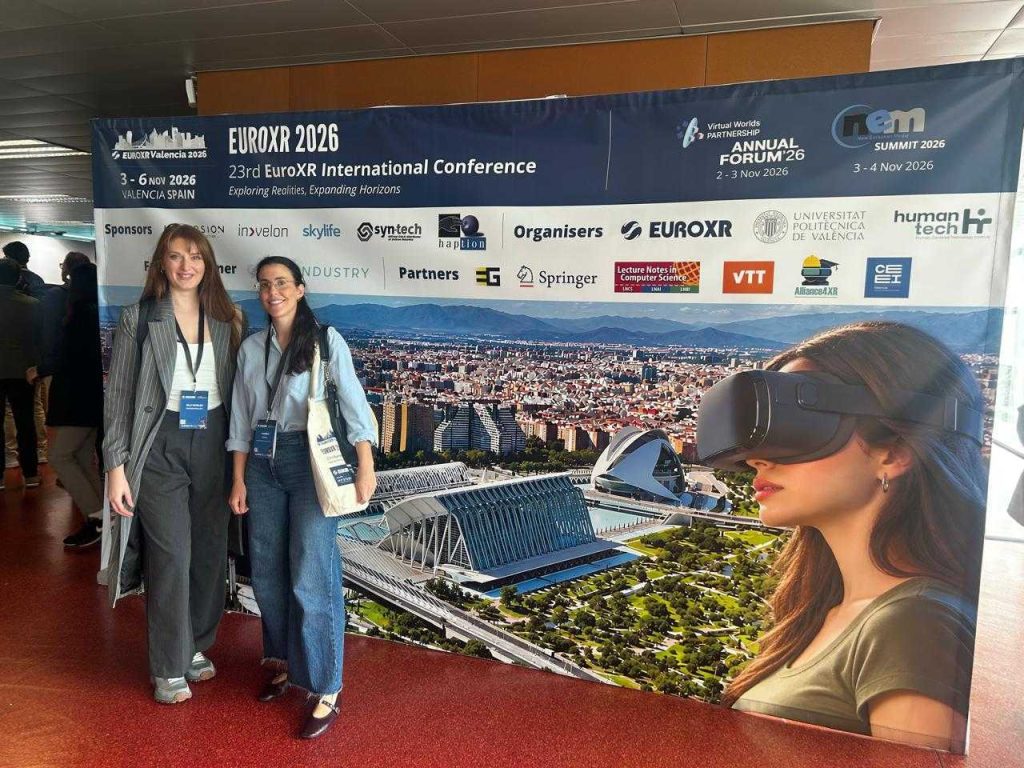
EuroXR 2026 also provided an opportunity to reinforce cooperation within the BeyondXR Cluster, represented by four European research and innovation projects: IRIS-XR, XR5.0, MOTIVATE XR and XR2INDUSTRY.
Besides IRIS-XR, each project contributed a different perspective on the development and application of immersive technologies.
- MOTIVATE XR organised a workshop exploring AI, digital twins, computer vision and no-code tools for industrial XR training and remote assistance, while introducing the BeyondXR Cluster's collaborative activities.
- XR2INDUSTRY presented its main public final event, showcasing software solutions and project results through dedicated sessions and demonstrations.
- XR5.0 participated in discussions and knowledge exchange with the wider European XR community.
The conference also offered opportunities for direct exchanges between project representatives, including Carmen Serna Ferrer from IRIS-XR and Elina Papadopoulou from XR5.0, highlighting the growing cooperation between European XR initiatives.
EuroXR 2026 provided a valuable opportunity to share research, exchange ideas with European XR specialists and explore how technological advances can translate into more practical, accessible and human-centred immersive experiences.

Where AI meets virtual worlds: IRIS-XR at the VWP Annual Forum 2026
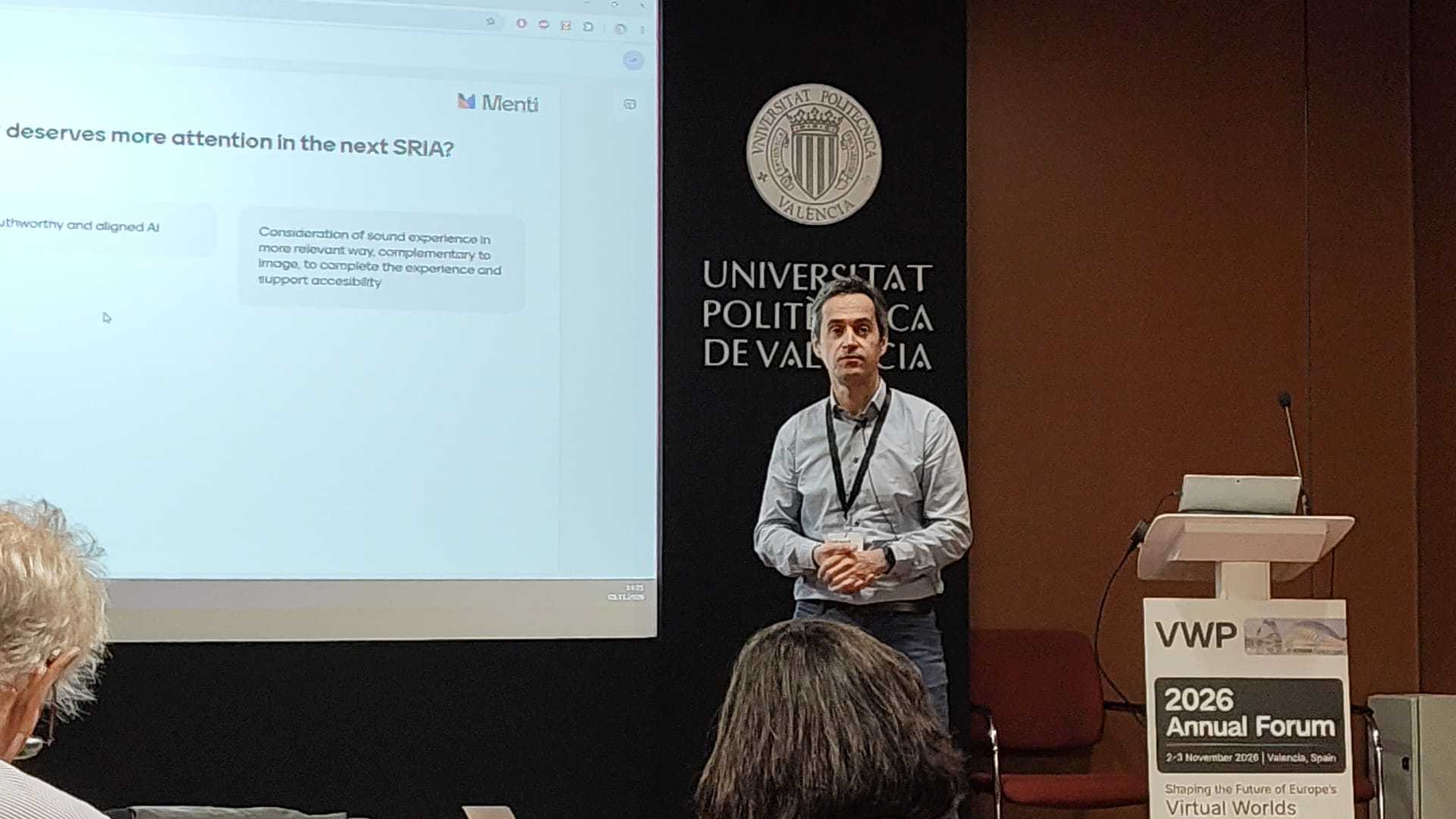
Artificial Intelligence is becoming increasingly important to the development of virtual worlds, raising new questions about how immersive technologies can become more intelligent, responsive and accessible. These topics were at the centre of discussions at the Virtual Worlds Partnership (VWP) Annual Forum, held on 2–3 November 2026 in Valencia, Spain, with the participation of the IRIS-XR project.
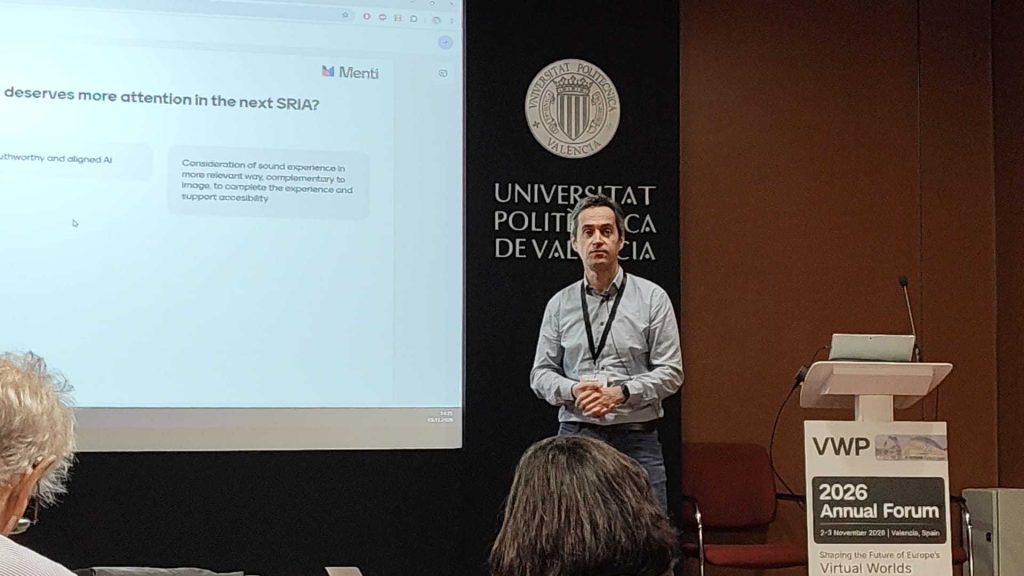
Organised within the European virtual worlds ecosystem, the Forum provided an opportunity for researchers, technology developers and industry representatives to exchange perspectives on the research and innovation priorities for future virtual worlds.
Applied AI for Virtual Worlds: IRIS-XR expertise in the discussion
A key contribution came from Dr Alain Pagani, IRIS-XR Project Coordinator from the German Research Centre for Artificial Intelligence (DFKI), who presented Applied AI for Virtual Worlds, a chapter of the Strategic Research and Innovation Agenda (SRIA).
His contribution addressed the role of AI in the evolution of virtual worlds, an area closely connected to IRIS-XR's ambition to develop more intuitive, energy-efficient and responsive Extended Reality technologies.
Within IRIS-XR, research focuses on integrating advanced sensing, eye-tracking, photonics and embedded AI to improve the interaction between users and immersive environments. These developments are particularly relevant to future virtual worlds, where systems will need to respond more naturally to human behaviour while maintaining high visual quality and real-time performance.
Connecting research priorities with European collaboration
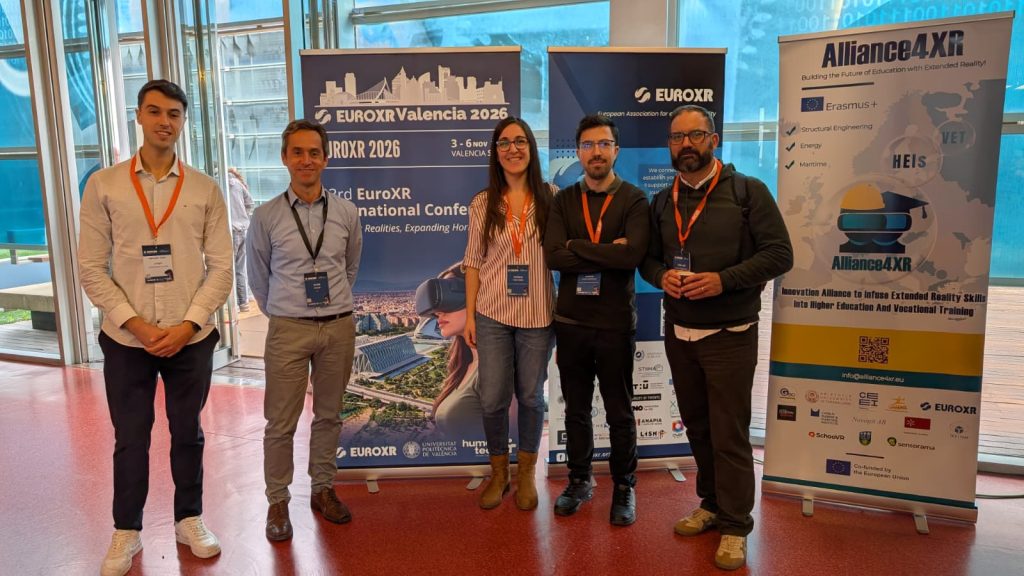
Beyond the conference discussions, the Forum provided an opportunity for IRIS-XR partners to meet in person and review ongoing activities and upcoming milestones.
Alain met also with Patricia Pons Tomás, Jose Luis Soler-Dominguez, Josep Carreres and Samuel Navas Medrano from ITI, and Carmen Serna Ferrer from AUSTRALO, who participated in discussions and networking activities within the European virtual worlds community.
For IRIS-XR, participation in the VWP Annual Forum was an opportunity to connect its technical research with broader European priorities for AI and immersive technologies, while identifying possibilities for cooperation across the European XR ecosystem.